
Why We Build Every Project in 3D
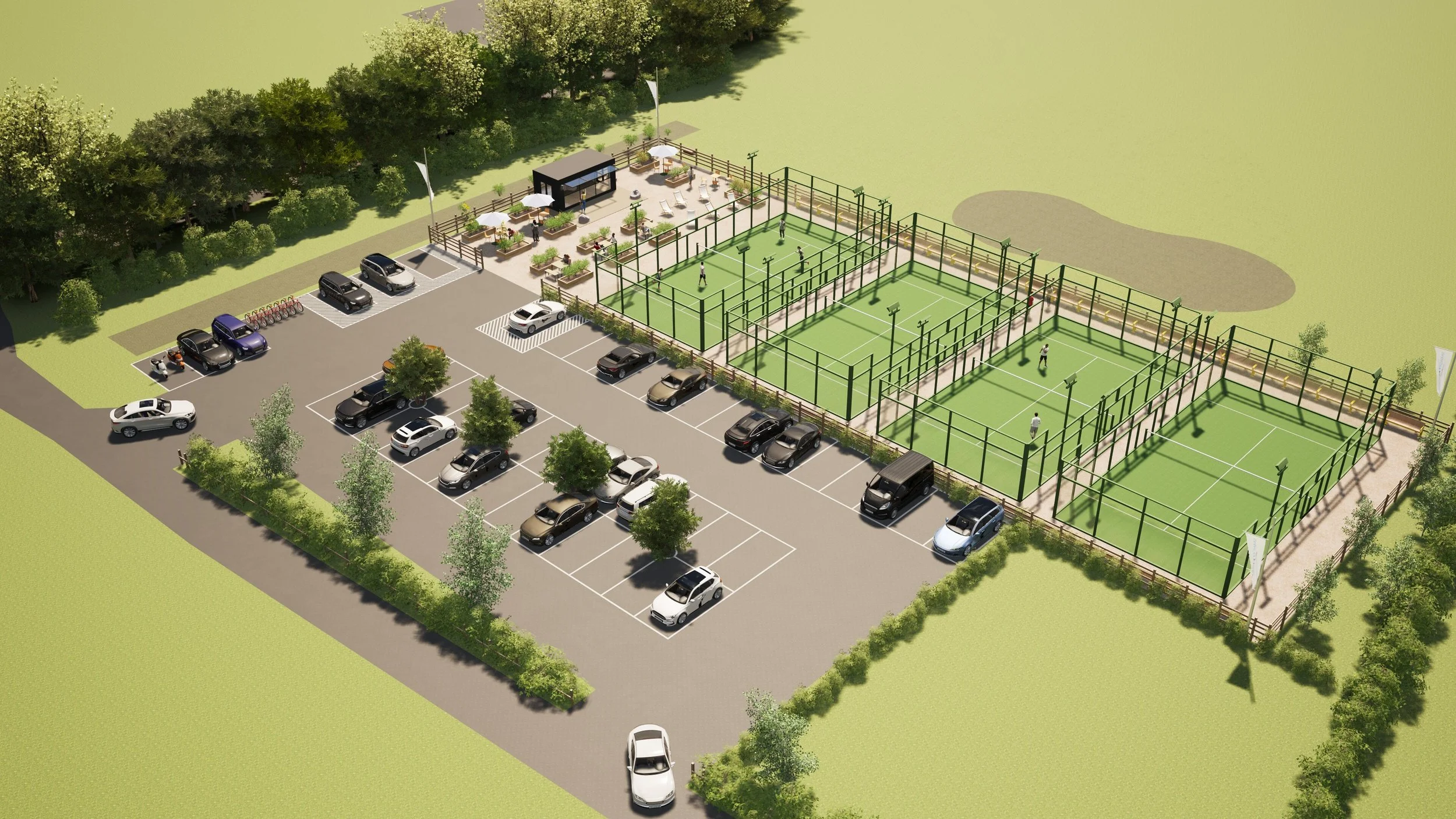
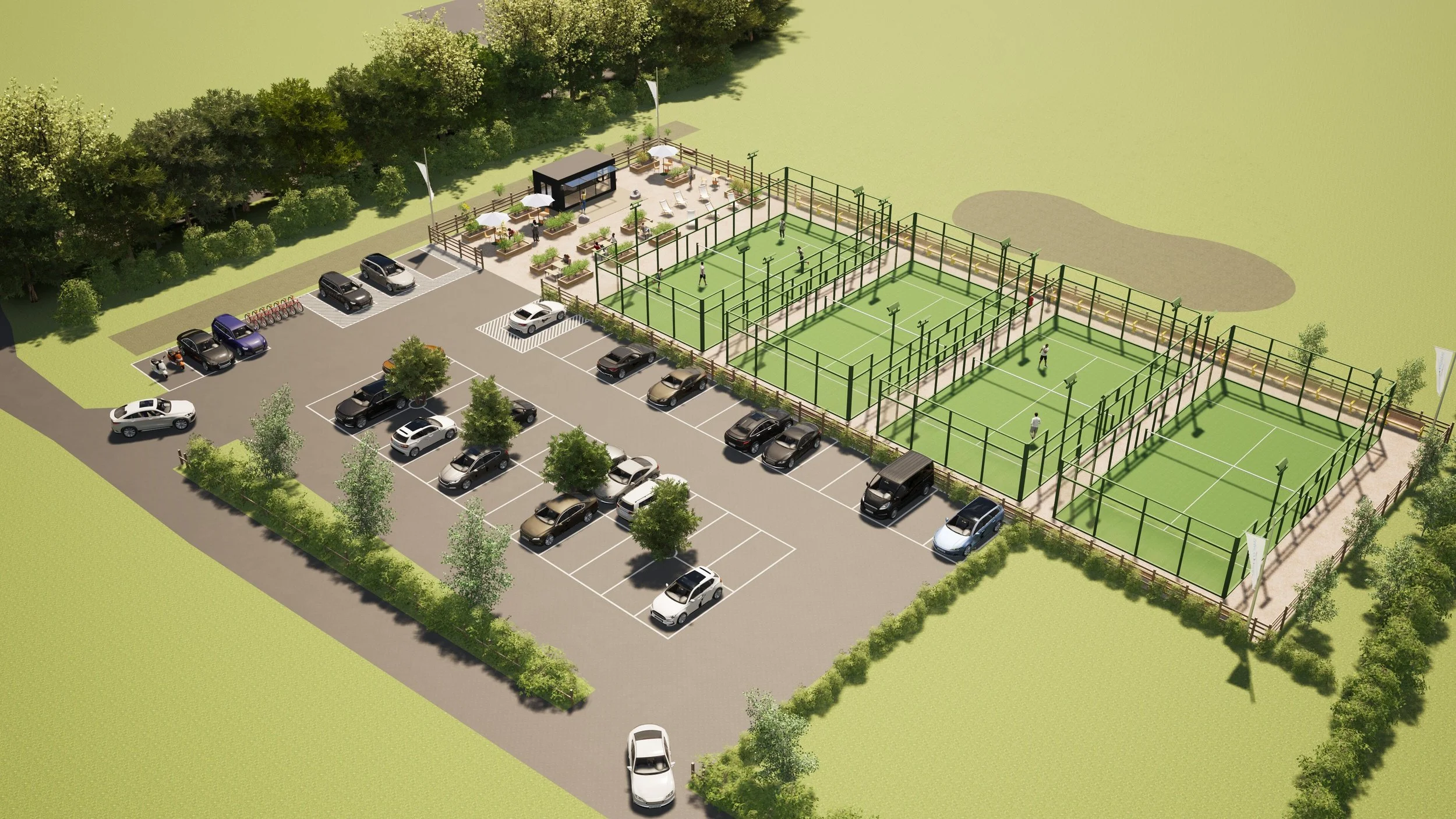
Overhead view of a new Padel Tennis Complex
Most clients don’t speak “architectural drawing” — and they shouldn’t have to.
One of the most common things we hear is: “I just can’t picture it.” And that’s perfectly understandable. Traditional architectural plans and elevations are essential, but they can be difficult to interpret if you’re not used to reading them. Lines on paper don’t always translate into real spaces in the imagination.
That’s why we automatically create 3D models for every project we take on.
3D Models Improve Understanding and Decision-Making
Being able to see your future home, development, or sports facility from all angles makes a huge difference — not only in understanding the design, but in feeling confident in the decisions you’re making.
Our 3D models allow clients to fly around the building, explore spaces, and visualise materials and layouts. It makes discussions more productive, quicker, and ultimately leads to better outcomes.
A Recent Example: Visualising Padel Courts for Stakeholder Buy-In
We’ve recently been working with a newly formed Padel company looking to introduce courts at several locations around the UK. These types of projects are often based on adding new courts to existing sports facilities — like tennis clubs or golf courses — which means multiple stakeholders are involved from the start.
The first conversations often happen with the landowners or management committees. If things progress, the proposals are then shared with the wider membership base. At each stage, it's vital the plans are presented clearly — and that’s where our 3D visuals come in.
We created a fly-through video of the proposed courts showing:
Exactly where the new Padel courts would be located on site
How many courts are being proposed
What supporting facilities are included
Labels and annotations for extra clarity
This visual was used in meetings and consultations to explain the proposal quickly and clearly — without needing to flick through technical drawings.
Beyond Planning: Marketing and Reuse
Once a 3D model exists, it can be used for more than just planning or consultations. Our clients regularly use the visuals for marketing — including websites, social media, and investor presentations.
And when it comes to repeat projects (which Padel is proving to be!), the benefit grows. We’re now working on several more Padel court schemes, and because we’ve already built the model, we can adapt and reuse elements — saving time and cost for our client.
If you're working on a new project and want to bring it to life — for planning, marketing or stakeholder engagement — get in touch.
We’d love to show you what’s possible.
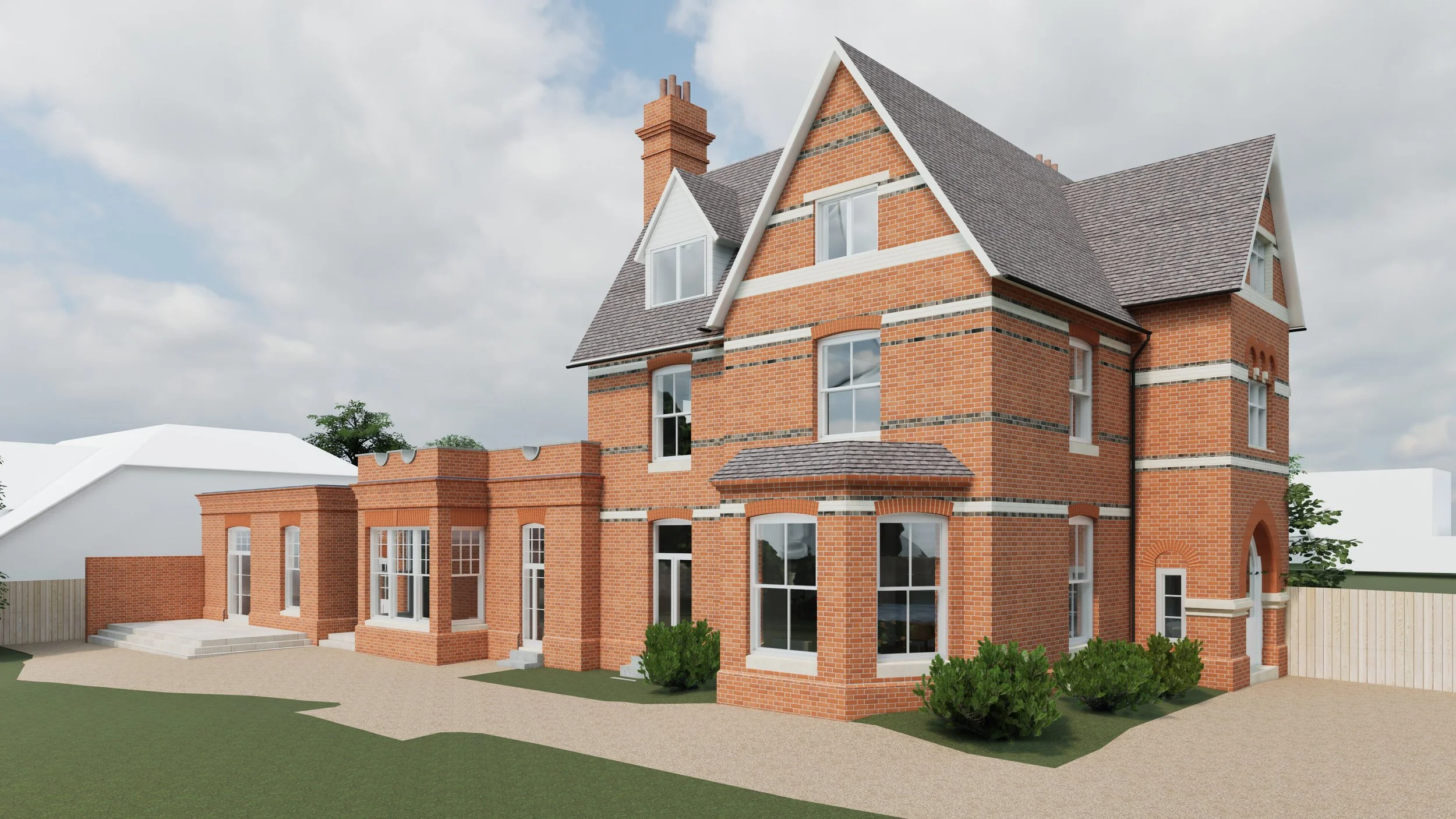
Sensitively extending this Victorian beauty
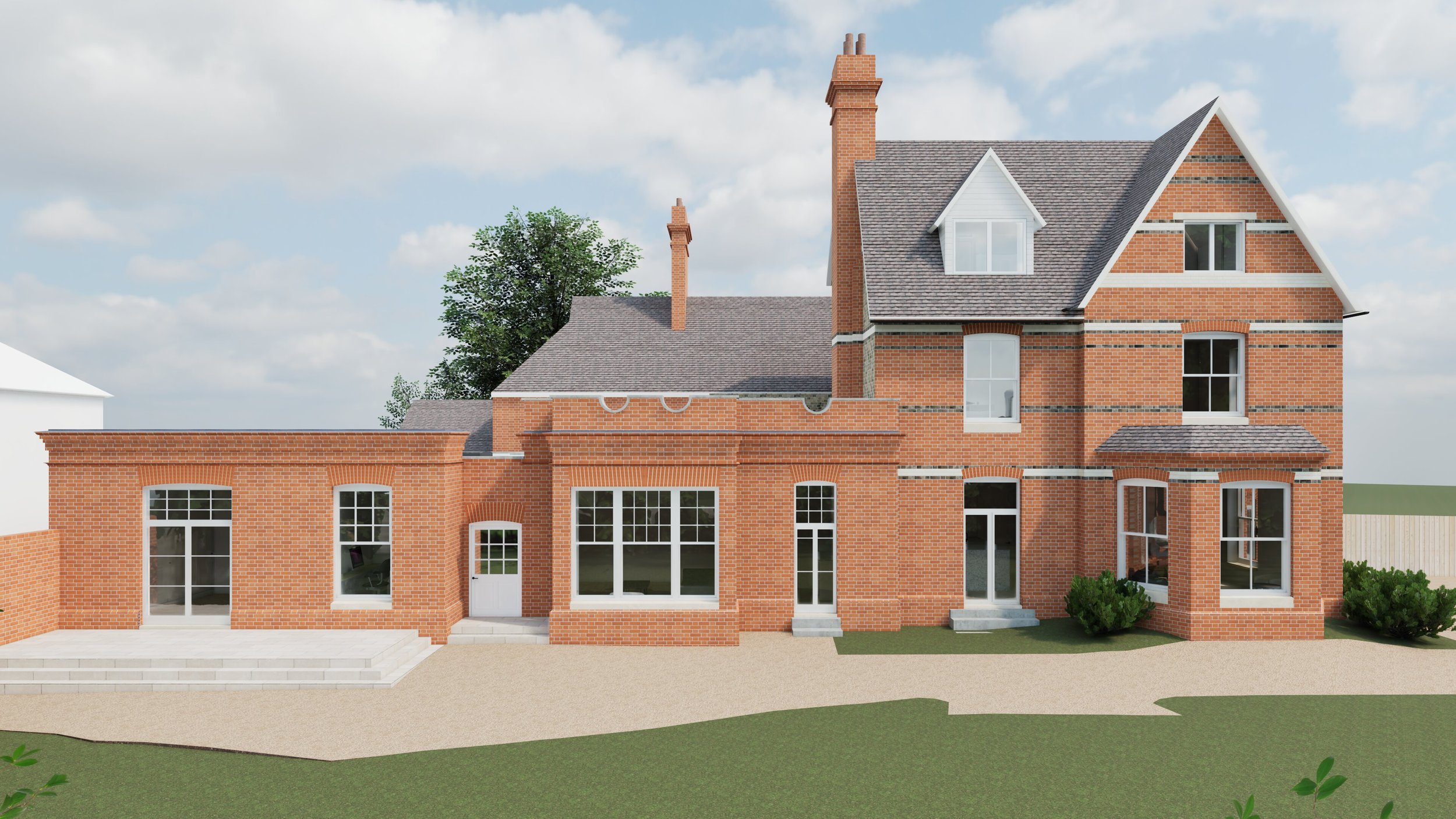
Back in 2019 we had planning permission for an extension on this house but the previous owners were unfortunately facing some health challenges so weren’t able to start the build and eventually sold the house.
Now a young couple with children are relocating from London to Mid Sussex and they are keen to remodel the house and make it work better for a modern family whilst keeping and enhancing the period features.
Following a detailed briefing at the house we reimagined the layout and produced sketch designs for a new extension that added bedrooms, bathrooms, a cosy snug, utility room and office.
The house originally had five bedrooms but just one bathroom so we’ve transformed it into a home with five bedrooms and four bathrooms including a new luxurious master bedroom suite with bathroom and dressing room. Additional built in storage is carefully integrated throughout the house so it feels elegant but is also practical.
Outside we’re working with a landscape designer to reduce the driveway and parking areas to create better gardens and the existing garage is becoming a home gym and more storage.
With a previous consent still valid (partially implemented with the new garage) and consultation completed with the neighbours we’re hopeful of a positive outcome.
Projects like this are exactly why we love what we do.
Future trends in property development.
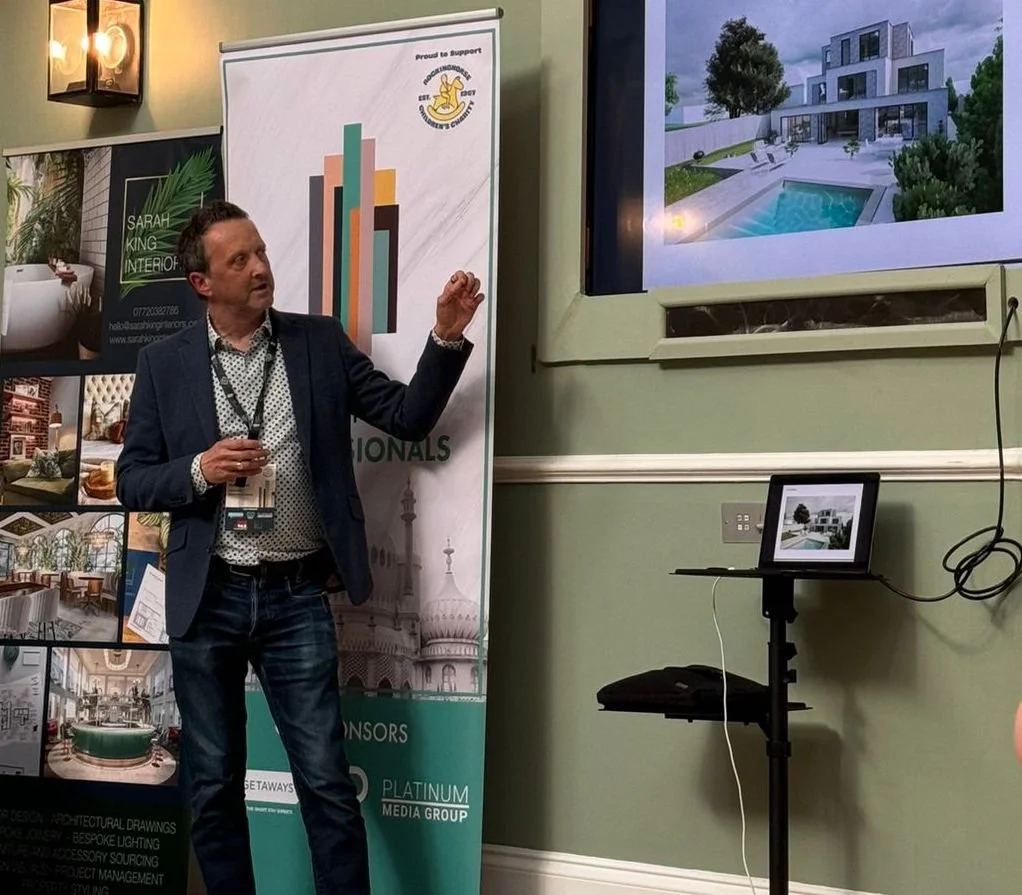
Last year, I had the pleasure of being the main speaker at the Property Professionals Lunch, a fantastic event attended by over 80 professionals from across the property and construction industries. I was grateful to Katie Price and Sophie Campbell-Adams of Britton and Time Solicitors for inviting me to share my experience of running Hampson Architects and my thoughts on future trends in property development.
For those who couldn’t attend, I wanted to share some key topics I discussed that are shaping the future of residential design.
1. Medium-Sized Co-Living Developments
Large-scale co-living developments, featuring 200+ flats above shared amenities like gyms, cafes, and workspaces, have become increasingly popular. Meanwhile, traditional HMOs (Houses of Multiple Occupation) have long provided shared living spaces in converted terraced houses. However, I believe the next major shift will be towards medium-sized co-living developments.
These will consist of 20-45 compact flats in one or multiple interconnected buildings, strategically positioned near existing amenities such as gyms, coffee shops, or coworking spaces. This model fills the gap between large co-living schemes and traditional HMOs, offering a higher quality and more community-focused living experience. The scale of these developments allows for both affordability and a strong sense of community, making them an attractive option for young professionals and urban dwellers.
2. Multi-Generational Living
With evolving family dynamics and rising property prices, multi-generational living is becoming an increasingly viable solution. More homeowners are adapting their properties to accommodate multiple generations under one roof, ensuring both independence and support.
A common approach involves creating a separate living space within the home—a self-contained studio with a kitchenette, bathroom, and private entrance. Initially designed for young adults seeking independence, these spaces can later be repurposed for elderly family members, providing a seamless and practical transition as family needs change. Future-proofing homes in this way allows families to stay together while maintaining privacy and flexibility.
3. Downsizer Developers
An emerging and particularly interesting trend is the rise of "downsizer developers"—homeowners in their 70s or 80s looking to unlock the full potential of their property. Many of these individuals own large, older homes that are costly to maintain and inefficient in terms of energy use.
We’re seeing more homeowners seeking planning permission to build smaller, eco-friendly homes on their existing land—often two-bedroom, zero-energy, single-level houses. This approach allows them to downsize into a home designed for comfort, sustainability, and accessibility while selling their original property to fund the new build. It’s a practical and financially savvy way to remain in a familiar area while embracing a more manageable and future-proof living arrangement.
Partnering with Hampson Architects
At Hampson Architects, we have extensive experience in designing residential projects that align with these emerging trends. Whether you’re considering a co-living space, a multi-generational home, or a sustainable downsizer development, we’re here to guide you through the process. Our expertise ensures that your project is both innovative and tailored to your specific needs.
If you’re thinking about starting a new project or simply exploring possibilities, let’s connect! We’d love to discuss how we can help bring your vision to life.
Why Hiring a Heritage-Experienced Architect is Crucial for Listed Buildings
Why Hiring a Heritage-Experienced Architect is Crucial for Listed Buildings
When working with listed buildings, one common phrase we hear often at Hampson Architects is, "It's a Listed Building, but only the outside is protected." If I had a pound for every time I’ve heard that, I’d have a substantial collection from nearly every enquiry. This statement reflects a widespread misconception that needs to be clarified—regardless of whether a building is listed as Grade I, Grade II, or Grade II*, the entire structure, inside and out, is protected. Understanding the implications of this legal protection is essential, especially when considering alterations or renovations.
The Legal Framework: Protecting the Entire Building
Listed building status isn't just about preserving the aesthetic appeal of a building's exterior. The protection extends to the entire property, inside and out. This legal safeguarding is not something to take lightly. If alterations or damages occur without the necessary consents, it could result in a criminal offence, leading to severe penalties. At Hampson Architects, we emphasize the importance of understanding and respecting this framework to ensure that any modifications enhance rather than diminish the building's historical value.
But why is it so important to protect the interior of a listed building, especially when it might seem devoid of original features?
The Significance of the Interior in Listed Buildings
Preserving the Original Layout: The internal layout of a listed building is a critical component of its historical narrative. Even if certain features have been removed over time, the original configuration of rooms and spaces offers insights into how the building was used and has evolved. For instance, removing historic walls can often be contentious. Heritage planners may require that some elements of these walls, such as "nibs" at each end, be retained. These remnants allow for the possibility of future reinstatement and help preserve the building's historical integrity.
Proportions and Volumes: The proportions and volumes of rooms within a listed building are more than just spatial considerations—they are a window into the past. These dimensions often reflect the original use and social structure of the building. Maintaining these proportions is crucial in preserving the authenticity of the space, even when the building’s use is adapted to modern needs.
Historical Context and Subtle Details: Even when a building appears stripped of ornate features, its interior can still reveal much about its original purpose and the lives of those who occupied it. For example, Regency buildings in Brunswick Square often have their most decorative elements on the ground and first floors—the primary living spaces. In contrast, the upper floors and basements, traditionally used by staff, have minimal decoration, highlighting the social hierarchies of the time. These subtleties are invaluable in telling the complete story of a building's history.
The Hampson Architects Approach: Combining Modernism with Heritage Expertise
At Hampson Architects, we are modernists but also with a profound respect for historical architecture. Our expertise lies in navigating the complexities of planning consents, even for Grade I listed buildings, where the challenges are particularly demanding. We approach each project with meticulous attention to detail, often delving into archives like those at The Keep to research original layouts and historical uses. This research is essential for ensuring that our proposals are not only functional but also true to the building’s historical narrative.
One of our notable projects involved restoring a Grade I listed flat to its original synagogue layout. This restoration required a delicate balance between enhancing the building’s functionality and preserving its authenticity—a challenge we met by staying true to the building's original design and purpose.
Currently, we're working on several projects that involve converting listed office buildings into residential spaces. This type of transformation often aligns better with the original character of these historic structures, allowing us to breathe new life into them while preserving their historical essence.
Unlocking the Potential of Your Listed Building
Working with a listed building requires a deep understanding of its historical, architectural, and legal contexts. At Hampson Architects, we combine our passion for modernism with our expertise in heritage architecture to help you unlock the full potential of your listed property. Whether you’re looking to restore, renovate, or repurpose a historic building, we are here to guide you through every step of the process, ensuring that the history is preserved while creating spaces that work for today and tomorrow.
If you're considering a project involving a listed building, we invite you to get in touch. Together, we can preserve history while creating functional and beautiful spaces for future generations.
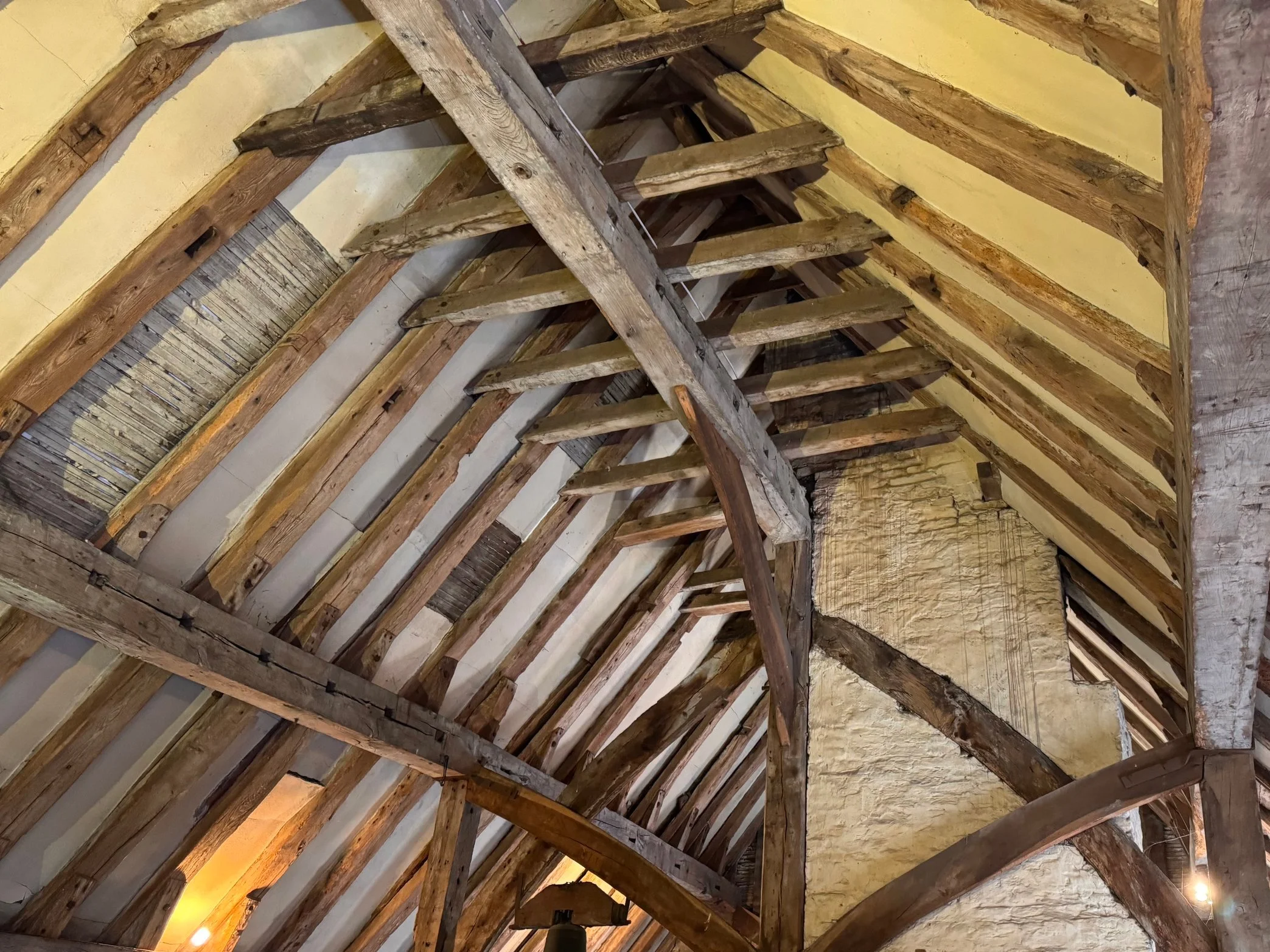
And for those who share our passion for historic buildings, here are some photos from my recent visit to the Anne of Cleves House in Lewes—a fascinating glimpse into the past with much of the original structure intact, offering valuable lessons in the importance of preservation.